

Quick answer
Good HVAC website design is built around one action: a homeowner booking an in-home estimate. That means a clear page for each service and each part of your service area, a tap-to-call number and a short form on every page, pages that pass Google's Core Web Vitals, your license number and reviews where people look, LocalBusiness schema and basic accessibility. Paid traffic should go to a landing page instead.
What makes good HVAC website design?
Good HVAC website design gets a homeowner from "my system is 15 years old" to a booked in-home estimate in as few taps as possible. Looks matter less than structure: clear service pages, local pages, a phone number you can tap, a short form, fast load times and proof that you are licensed and trusted.
I run audits at Scale Theory, and the contractor website is one of the first things I open. We are new to the US market, with no HVAC clients or results to show yet, so what follows is the checklist I use and the reasons behind each item, with the rules and standards linked so you can check them yourself.
One definition before we start. A booked estimate is a qualified homeowner booked for an in-home estimate on your calendar, at a set time. Every part of the site should move people toward that, or get out of the way.
What pages does an HVAC contractor website need?
A home page, one page per main service, one page per main city or area you serve, a financing page if you offer it, reviews, an about page with your license and team, and a contact page. Each page answers one question for one kind of homeowner, then asks them to call or book.
Here is the structure I look for on a replacement-focused contractor site:
| Page | What it must answer | Main action |
|---|---|---|
| Home | Who you are, where you work, what you install | Call or book an estimate |
| AC replacement | Signs it is time, what the estimate covers, financing | Book an estimate |
| Heat pump installation | How it heats and cools, who it suits, rebates you can offer | Book an estimate |
| AC and furnace changeout | Whether both units need replacing, typical install time | Book an estimate |
| Maintenance plan | What is included, price, how to join | Join or call |
| Service area pages | That you work in their city, with local jobs and reviews | Call or book |
| Financing | Terms you actually offer, how to apply | Apply or book |
| Reviews | Recent reviews with job type and city | Book an estimate |
| About | Owner, team, license number, years in business, insurance | Call |
Repairs can have a page too, but keep it from crowding the replacement pages. If most of your margin comes from changeouts, the navigation should say so.
Why do service and service area pages matter so much?
Because homeowners search and decide by job and by place. Someone in Round Rock looking for a heat pump wants a page about heat pumps that mentions Round Rock, not a home page listing 14 services and 30 towns. Separate pages also give Google a clear match for each search.
A good service area page is not your home page with the city name swapped. It needs things that are true for that city: jobs you have done there (with the homeowner's permission), reviews from customers there, the utility and any rebate you participate in, and drive time or same-week availability if it is real. Thin copies of the same page across 30 cities help nobody and are easy for Google to ignore.
Keep each service page focused on one decision. The AC replacement page should cover signs of failure, what happens at the estimate, how you size the system, warranty on parts and labor, financing and install timing. Then one clear button.

How should click-to-call and forms work on an HVAC site?
On a phone, the number should sit in the header of every page as a tap-to-call link, and a short form should be one tap away. Ask only what you need to book: name, cell, ZIP, and what they need. Longer qualifying questions work better as tap-to-answer steps than as one long form.
What I check on mobile:
- Sticky call button. A tap-to-call bar that stays at the bottom of the screen. The number is a real
tel:link, not an image. - Form above the fold on service pages, or a button that opens it without leaving the page.
- Few fields. Each typed field is a reason to quit. Tap-to-answer choices (replacement or repair, system age, timing) are easier on a phone and tell your CSR more.
- A consent line next to the phone field if you plan to send automated texts. Our post on HVAC lead follow-up covers why.
- A thank-you page that says what happens next: "We'll text you in the next minute with two estimate times." Then make sure that is true.
The form is only half of it. A form that drops into an inbox nobody checks until Monday is worse than no form, because the homeowner books with whoever called back first.
How fast does an HVAC website need to be?
Fast enough to pass Google's Core Web Vitals on mobile. Google's web.dev guidance sets the main content loading within 2.5 seconds, responses to taps within 200 milliseconds, and a layout shift score of 0.1 or less, measured at the 75th percentile of real visits.
What the three measures mean on a contractor site:
| Metric | Good threshold (web.dev) | Usual problem on HVAC sites |
|---|---|---|
| Largest Contentful Paint (LCP) | 2.5 seconds or less | Oversized hero photo or video of a truck |
| Interaction to Next Paint (INP) | 200 milliseconds or less | Heavy chat widgets, review sliders, too many tracking scripts |
| Cumulative Layout Shift (CLS) | 0.1 or less | Banners and pop-ups that push the page down after it loads |
The fixes are not glamorous: compress and resize images, drop sliders, load the chat widget after the page, and remove scripts from tools you no longer use. Test your service pages on a real phone over a cellular connection, not only on the office Wi-Fi.
How do you show trust: license, reviews and photos?
Show your license number, real reviews and your own job photos where people look before they call: the header or footer, next to every form and on the about page. Homeowners are about to let a stranger into their house and spend thousands. Stock photos of smiling models undo a lot of good copy.
License number. In Texas, rule 16 TAC 75.71 says "All advertising by air conditioning and refrigeration contracting companies designed to solicit air conditioning or refrigeration business must include the affiliated licensee's license number." The listed exceptions cover things like nationally televised ads, phone book listings and promotional items. Websites are not on the list. The same rule requires the number, plus TDLR's consumer notice, on proposals and invoices, and the number on both sides of your vehicles in letters at least two inches high. TDLR's penalty schedule treats a missing license number in advertising as a Class A violation, with a listed range of $500 to $1,000. This is general information, not legal advice: confirm the current text on TDLR's site, and check your own state's rules if you work outside Texas.
Reviews. Show recent reviews with the job type and city ("Heat pump install, Pflugerville"). Link to your Google profile so people can see you did not pick only the best ones. Our post on HVAC Google reviews covers how to get more without breaking Google's or the FTC's rules.
Photos. Your trucks, your crews, your installs. A tidy line set and a level pad say more than any badge.
What schema should an HVAC website use?
Use the HVACBusiness type from schema.org, which sits under LocalBusiness and HomeAndConstructionBusiness. Google's guidance is to use "the most specific LocalBusiness sub-type possible". Mark up your name and address (the two required properties), plus phone, URL, hours and the area you serve.
Schema.org defines HVACBusiness as "A business that provides Heating, Ventilation and Air Conditioning services." Useful properties include telephone, address, openingHours, areaServed and priceRange. Put it on the home page and contact page, and make sure it matches your Google Business Profile exactly. Our post on the HVAC Google Business Profile covers getting that profile right.
One trap: review stars. Google's review snippet guidelines say that if a business "controls the reviews about itself", its pages using LocalBusiness or Organization structured data are ineligible for the star review feature. Adding aggregateRating markup to your own site will not put stars next to your listing in search. Let the Google profile carry them.
What accessibility basics should an HVAC website meet?
At minimum: readable color contrast, text alternatives on images, labels on every form field, captions on videos, buttons big enough to tap, and a site that works with a keyboard. The Department of Justice says the ADA applies to goods and services businesses offer "on the web", and points to WCAG as helpful guidance.
The DOJ's web guidance lists common barriers: poor color contrast, missing text alternatives on images, no captions on videos, inaccessible forms, and mouse-only navigation. It does not make WCAG a binding standard for private businesses, but it names it as a resource. WCAG 2.2 at Level AA asks for a contrast ratio of at least 4.5:1 for normal text and 3:1 for large text, and tap targets of at least 24 by 24 CSS pixels, with some exceptions.
On contractor sites the usual failures are white text over a photo of a condenser, form fields with placeholder text instead of labels, and tiny phone links in the footer. All three hurt conversions for everyone, not only people using assistive technology. This is general information, not legal advice.
Website or landing page: where should paid traffic go?
Paid traffic should usually go to a landing page, not your website. A website has to serve everyone, so it has many exits. A landing page is built for one offer in one service area and has one action. Google Ads also rates landing page experience as part of Quality Score, judged on how relevant and useful the page is to people who clicked.
Google describes landing page experience as "How relevant and useful your landing page is to people who click your ad." A homeowner who clicked "AC replacement in Austin" and lands on a home page with repair coupons, a careers link and a blog has to hunt. On a landing page they see the offer they clicked, local reviews and a short set of tap-to-answer questions.
Worked example: same ad spend, two destinations (planning assumptions)
$4,000 a month of ad spend at an assumed $10 average cost per click = 400 visits
Website home page at an assumed 3% conversion rate: 400 x 3% = 12 leads
Landing page at an assumed 8% conversion rate: 400 x 8% = 32 leads
At 60% passing a qualifier and 60% of those booking: website 12 x 60% x 60% = about 4 booked estimates; landing page 32 x 60% x 60% = about 11 to 12 booked estimates
Ad cost per booked estimate: website $4,000 / 4.3 = about $930; landing page $4,000 / 11.5 = about $350
The click cost and both conversion rates are planning assumptions, not benchmarks or client results. Use your own analytics to replace them.
That does not make the website less important. It does the work for people who search your name, hear about you from a neighbor, or check you out after seeing an ad. We build landing pages, not full websites, and our HVAC landing pages page shows the layout we use. If the bigger question is whether to put money into search rankings or ads first, read HVAC SEO vs PPC.
What should an Austin HVAC website include?
Local proof that matters in Central Texas: your TDLR license number on every page, heat pump content as well as AC, and Austin Energy rebate details if you are a participating contractor. Austin homes run their systems hard, and many heat with electricity, so both the AC and heat pump pages earn their place.
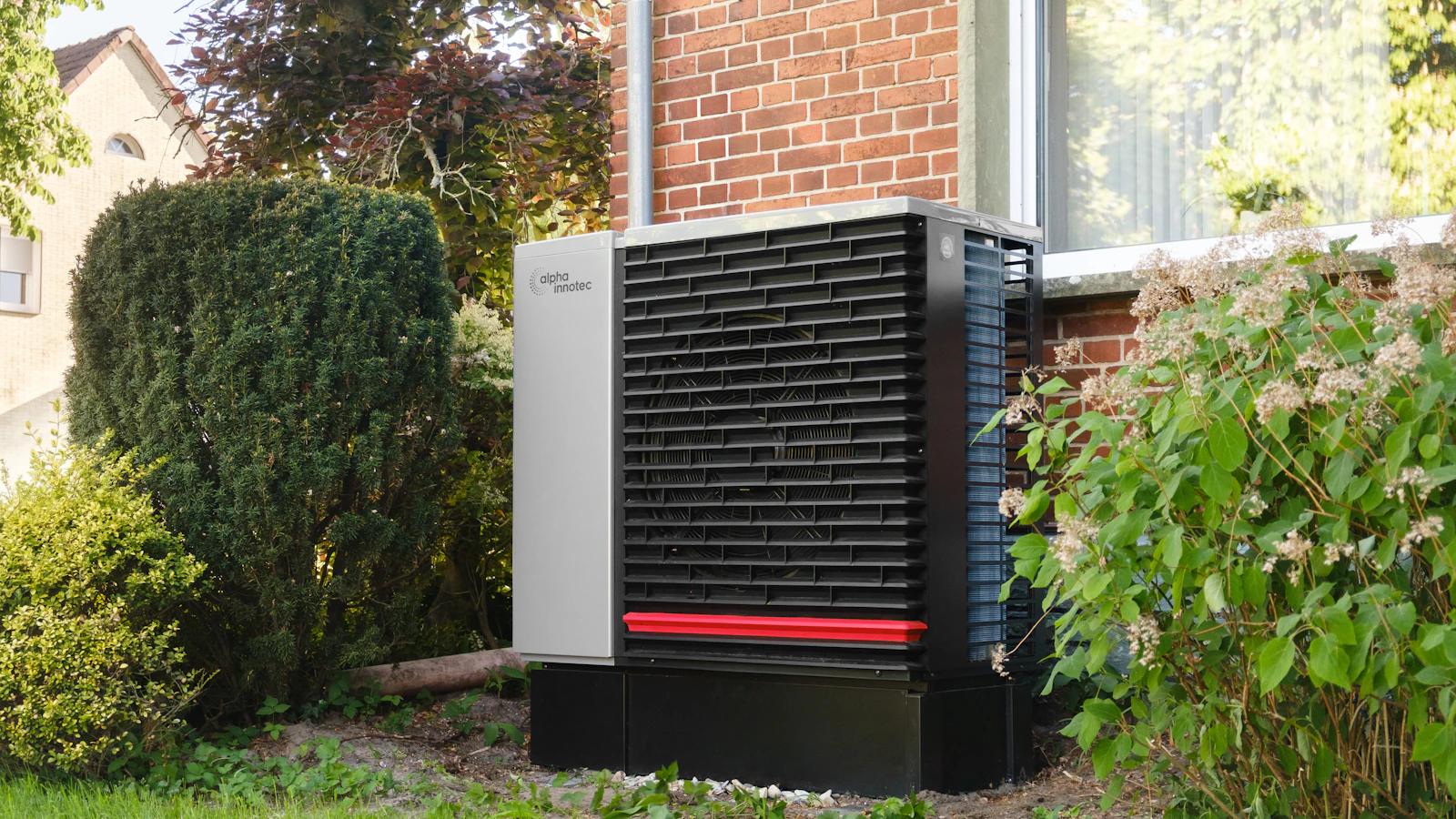
The cooling season is long. NOAA's 1991 to 2020 normals for Austin Camp Mabry show about 123 days a year at or above 90°F and about 29 days at or above 100°F, with an average summer high near 96°F. Freezing nights are rare, about 12 a year. So a September breakdown is still an urgent job, and your site should make same-week estimates easy to book.
Heating fuel splits toward electricity. The Census Bureau's 2024 American Community Survey shows about 57% of occupied homes in the Austin-Round Rock-San Marcos metro heat with electricity and about 38% with utility gas. That makes a clear heat pump page worth the effort, alongside an AC and furnace changeout page for gas homes.
Rebates belong on the page only if they apply. Austin Energy advertises central AC rebates of $600 to $800 and heat pump rebates of $650 to $950, depending on efficiency tier. It requires an Austin Energy participating contractor and the customer must "receive electricity from Austin Energy". The existing system must be 10 years old or older, and all components of the system must be replaced. Funding is "first-come, first-served". Homeowners in parts of the metro served by other utilities will not qualify, so your service area pages should say which neighborhoods the rebate covers rather than promising it everywhere.
More on the market is on our Austin HVAC marketing page. If your site already gets leads but too few turn into appointments, start with our post on HVAC booked estimates.
Sources
- Web Vitals | web.dev
- HVACBusiness | Schema.org
- Local Business (LocalBusiness) Structured Data | Google Search Central
- Review Snippet (Review, AggregateRating) Structured Data | Google Search Central
- 16 Tex. Admin. Code § 75.71, Responsibilities of the Contracting Company | Cornell LII
- Air Conditioning and Refrigeration Contractors Penalties and Sanctions | TDLR
- Guidance on Web Accessibility and the ADA | ADA.gov
- Understanding Success Criterion 1.4.3: Contrast (Minimum) | W3C WAI
- Understanding Success Criterion 2.5.8: Target Size (Minimum) | W3C WAI
- About Quality Score | Google Ads Help
- Air Conditioning rebates | Austin Energy
- Normals Annual/Seasonal 1991 to 2020, Austin Camp Mabry (USW00013958) | NOAA NCEI
- American Community Survey 2024 1-year, table B25040 House Heating Fuel | U.S. Census Bureau

Sam
Sam runs every strategy call and buys every ad. Before going HVAC-only, he ran a performance marketing agency: SEO, Meta and Google ads, CRM automation.
More about Sam